

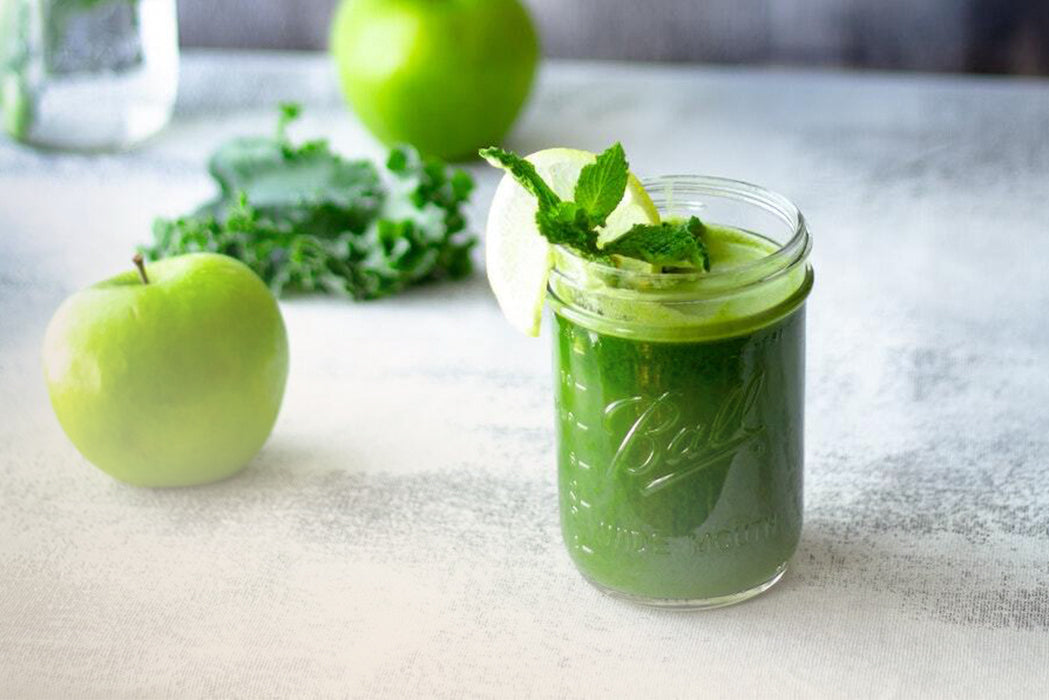
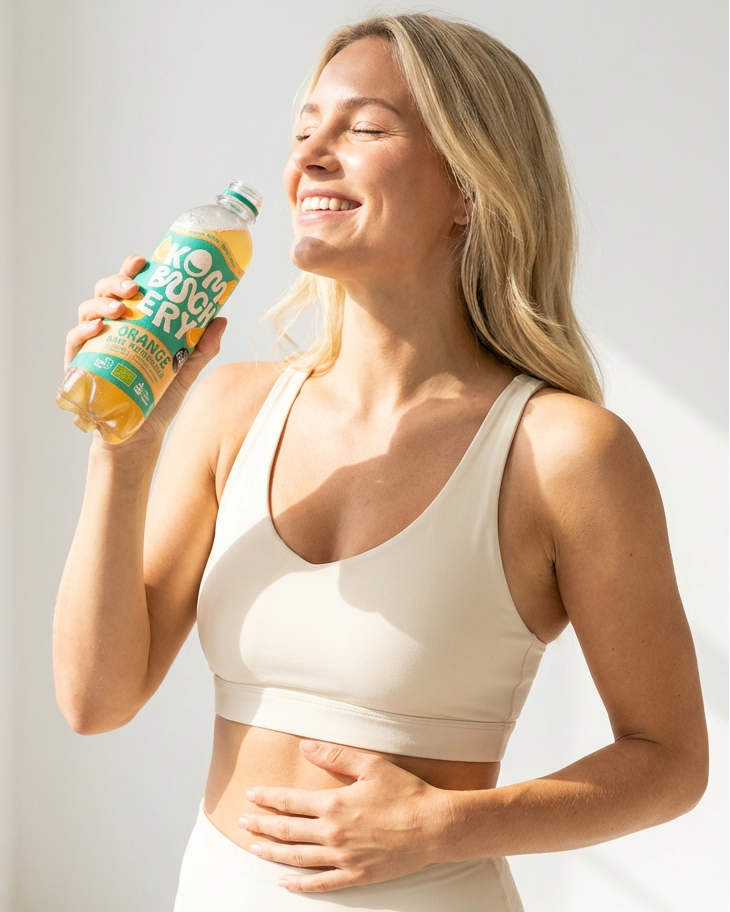
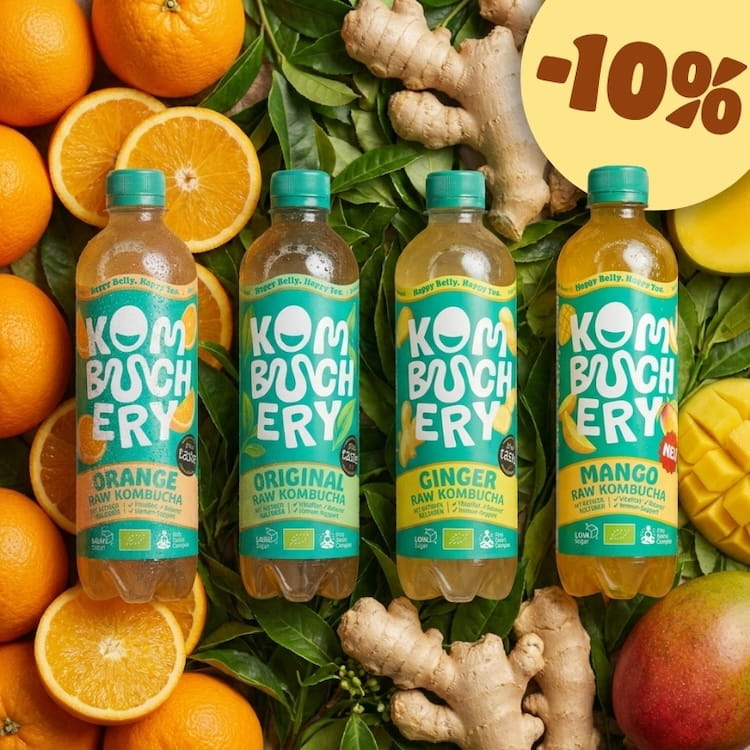
Kombucha brings natural fermentation and a characteristic sweet and sour taste to your smoothie. Combined with fruits, vegetables, and leafy greens, it creates a variety of drinks with different vitamins, minerals, and fiber. Here we show you three simple recipes for green Kombucha smoothies.
Smoothies, now on everyone's lips, can be the perfect breakfast, optimal snack, or a quick lunch – a delicious treat for any time of day or simply an extra boost of micronutrients to your regular meals.
What makes the green smoothie so special?
The essential and most important part of a green smoothie are the green leaves. Depending on the variety, green plants provide various vitamins, minerals, fiber, and phytochemicals. There is much to suggest that green plants have always been a staple food for humans.
Our diet has changed significantly over time. With a smoothie, you can easily combine different types of fruit, vegetables, and leafy greens, bringing variety to your diet. The nutrients contained depend on the ingredients used.

What's in the Green Smoothie
Essential Vitamins
A smoothie combines various plant-based ingredients and thus their different nutrients.
More Minerals Than You Might Think
Depending on the variety, green leaves provide minerals such as calcium and magnesium, among others.
Precious Trace Elements
Depending on the selection, leafy greens, fruits, seeds, and other ingredients provide various trace elements such as iron, zinc, and selenium, as well as minerals like potassium, magnesium, and phosphorus.
High-Quality Amino Acids
In addition to carbohydrates and fiber, plant-based ingredients also provide different amounts of protein and amino acids. How much of these are in the finished smoothie depends on the ingredients used.
Antioxidants and Phytochemicals
Leaves, fruits, and fruit seeds contain various phytochemicals. Which ones are present depends on the specific fruit and vegetable selection in your smoothie.
The Mysterious Superstar Chlorophyll
Chlorophyll is the natural green plant pigment and is responsible for the intense color of leafy greens and wild herbs.
Fiber from Fruits, Vegetables, and Leafy Greens
Fiber is a natural component of plant-based foods and is part of a balanced diet. Depending on the selection, green leaves, fruits, and vegetables provide different soluble and insoluble fibers. Combined with kombucha, this creates a fresh smoothie that combines plant-based ingredients with the special taste of a fermented tea drink.
Green Roots
Keep it simple
Try different combinations and regularly vary your fruits, vegetables, and leafy greens. This creates different flavors and simultaneously brings more diversity in plants and nutrients to your smoothies.
The basic smoothie should ideally always contain the following ingredients – preferably all organic:
- Fruit, e.g., apple, banana, pear, mango, berries
- 1 slice of lemon or lime
- Ginger
- Leafy greens or green vegetables, e.g., spinach, lettuce, kale, celery, nettle
- Liquid, e.g., filtered tap water, mineral water, kombucha, freshly squeezed juice
Possible extras: Nuts, seeds, and spices like hemp seeds, nut butter, turmeric, or cinnamon. For your smoothies, use only ingredients that are clearly suitable for consumption as food.
Tip: Feel free to use frozen fruit or frozen leafy greens like young spinach. Frozen fruit and vegetables are a practical alternative and can be stored for a long time.
Green Kombucha Smoothies – 3 Recipes

Green Basic Booch
Ingredients for approx. 1 liter
- 1 ripe banana
- 1 to 2 apples, depending on size
- 2 handfuls of spinach
- 1 slice of lemon, approx. 2 cm thick,
- Ginger to taste
- Mint to taste
- 1/2 L Kombucha, homemade or Kombucha Original
How to make it
- Peel the banana, break it roughly into pieces.
- Remove the stem from the apple. Cut the apple into pieces.
- Cut the peel off the lemon slice. You can add a little of it to the smoothie for flavor. Tip: Leave the white pith around the lemon on. It contains various phytochemicals.
- Put all ingredients into the blender
- Blend all ingredients until they are as finely pureed as possible.
- Pour into a nice glass, decorate as desired, and enjoy your smoothie.
Tip: Please make sure that the smoothie does not get too warm from prolonged blending.

Berry Booch
Berry Smoothie Recipe with Flowers
Ingredients for approx. 0.5 liters
- 1 to 2 handfuls of edible flowers, e.g., daisies, dandelions, pansies, deadnettles, forget-me-nots, cuckoo flowers, wild roses
- 2 bananas
- 200 to 300 g fresh berries (raspberries, strawberries, blueberries)
- 1 pinch of ground vanilla
- 200 to 300 ml of your favorite kombucha, depending on how creamy you like your smoothie
How to make it
- Clean ingredients, peel or remove pulp if necessary.
- Cut to blender-friendly size.
- Put everything in the blender and blend until smooth.
- Enjoy heartily.
Honeybreeze Booch
Honeydew Melon Smoothie with Lemon Balm
Ingredients for approx. 650 ml
- 5 stalks of chard
- 2 sprigs of lemon balm
- ½ honeydew melon
- ½ avocado
- 1 banana
- 200 to 300 ml of your favorite kombucha
How to make it
- Clean ingredients and cut to blender-friendly size.
- Halve the avocado, remove the pit, and scoop out the flesh.
- Add everything to the blender and blend until smooth.
- Enjoy your honeydew melon smoothie.
Tip: Depending on the blender model, I recommend pouring the kombucha into a glass beforehand and stirring out the carbonation to avoid unnecessary pressure buildup in the appliance during blending.
FAQ
What blender do I need for a Green Smoothie?
It's best to get advice on this. Recommended brands include: Vitamix, Nutribullet, Bianco di Puro, Wartmann Mixer
Buy a smoothie or make it yourself?
Ready-made smoothies vary significantly in ingredients, processing, taste, and composition depending on the manufacturer. When making your own, you can decide which fruits, vegetables, and leafy greens go into your smoothie and adjust the taste and consistency individually.
For store-bought smoothies, it's worth checking the ingredient list and nutritional information, as the fruit content, sugar content, processing, and other ingredients can vary from product to product.
Conclusion: When making your own, you decide which ingredients go into your smoothie and can flexibly adjust the taste and composition.
What should NOT go into a Green Smoothie?
For a light green smoothie, we recommend keeping the ingredient list simple and combining according to personal taste:
- Unripe fruits – they can affect the taste and consistency of the smoothie.
- Added sugars or sugar substitutes, in any form, such as honey, concentrated fruit juices, maple syrup. If your green smoothie isn't sweet enough, simply use perfectly ripe fruits, such as brown bananas, sweet mangoes, or Medjool dates.
- Dairy products, such as yogurt, quark, or milk, change the taste, consistency, and nutritional composition of the smoothie. Whether you use them is therefore primarily a matter of personal preference.
- Juices – Commercial fruit juices and vegetable juices are highly heated to enable long storage times. Juices such as apple juice, tomato juice, orange juice, vegetable juice, and multivitamin juice.
- Plant-based milk / vegan milk, such as rice milk, soy milk, oat milk, and almond milk, etc.
- Oils, nuts, or seeds change the taste, consistency, and nutritional composition of the smoothie. If you're looking for variety, you can prepare your smoothie as a bowl, for example, and supplement it with chopped fruits, granola, berries, herbs, and chia or hemp seeds.
Sources:
- deine-ernaehrung.de Ulrike Eder
- Book: Green Smoothies – The Healthy Mini-Meal from the Blender,
Dr. Med. Christian Guth / Burkhard Hickisch, GU - gruenesmoothies.de
Good luck with the preparation and good health!





Share: