

Prebiotics often stand in the shadow of their more well-known "relatives," probiotics. While probiotics are living microorganisms that we ingest through food or supplements, prebiotics serve as food for the beneficial bacteria in the gut. They serve as a nutrient source for certain gut bacteria and are therefore an exciting component of a fiber-rich diet. But why exactly does the body need these special dietary fibers?
In this blog post, we explain in detail what prebiotics are, in which foods they occur, and which connections between prebiotic fibers, the gut microbiome, and nutrition are scientifically investigated.
What exactly are prebiotics?
Prebiotics are indigestible dietary fibers — mostly special carbohydrates — that pass through the small intestine unchanged and are only fermented by gut bacteria in the large intestine. The best-known prebiotic substances include:
-
Inulin
-
Oligofructose (FOS)
-
Galactooligosaccharides (GOS)
-
Resistant Starch
-
Certain Beta-Glucans
Important: Prebiotics selectively promote the growth of beneficial bacteria, e.g., Lactobacillus and Bifidobacterium. This allows them to influence the composition and activity of the gut microbiome.
What prebiotics do in the gut
1. Prebiotics and the Gut Microbiome
The microbiome is a highly complex ecosystem of billions of microorganisms. The gut microbiome is involved in various digestive and metabolic processes.
Certain prebiotic substances can be utilized by selected gut bacteria. How this affects the composition and activity of the gut microbiome depends, among other things, on the specific substance, the amount consumed, and the individual composition of the microbiome.
2. Fermentation produces short-chain fatty acids (SCFAs)
When gut bacteria ferment prebiotics, short-chain fatty acids such as:
-
Butyrate (Butyric Acid)
-
Propionate
-
Acetate
These short-chain fatty acids fulfill various biological functions:
Butyrate
-
Important energy source for the cells of the large intestine
-
Arises from the bacterial fermentation of certain carbohydrates
-
Belongs to the short-chain fatty acids (SCFAs)
-
Is involved in various metabolic processes in the gut
Propionate and Acetate
-
Belong to the commonly occurring short-chain fatty acids
-
Are produced by microbial fermentation in the large intestine
-
Are integrated into different metabolic pathways after their formation
Short-chain fatty acids are metabolic products of bacterial fermentation in the gut.
3. Prebiotics and the Immune System in Research
The gut, gut microbiome, and immune system are connected through various biological mechanisms. How individual prebiotic substances influence these complex relationships is scientifically investigated and depends on the substance under study and the current scientific evidence.
Certain prebiotic fibers are utilized by selected gut bacteria. This process produces, among other things, short-chain fatty acids such as acetate, propionate, and butyrate.
4. Dietary Fibers and Digestion
Certain dietary fibers can increase stool volume and thus contribute to the characteristics of a fiber-rich diet.
Prebiotic fibers can be easily integrated into a varied diet through many plant-based foods.
5. Prebiotics and the Gut-Brain Axis
The gut and brain communicate through various signaling pathways; nerve connections, neurotransmitters, and microbial metabolites are among the areas of study.
The gut microbiome and the gut-brain axis are in close exchange. Prebiotic fibers therefore also play an interesting role in nutritional research concerning this interplay.
Possible connections between certain prebiotic fibers, the gut microbiome, and parameters of the so-called gut-brain axis are also scientifically investigated. However, the results cannot be universally applied to all prebiotics or foods.
6. Prebiotics and Mineral Balance
Prebiotic fibers are fermented in the large intestine and can alter the local environment there. They are therefore an interesting component of a fiber-rich diet. This is because the formation of SCFAs lowers the pH value in the gut, which makes certain nutrients more soluble.
7. How Many Prebiotics Do You Need?
Most people consume significantly less fiber than recommended. The general recommendation for fiber is at least 25–30 g per day, a few grams of which can come from prebiotic fibers.
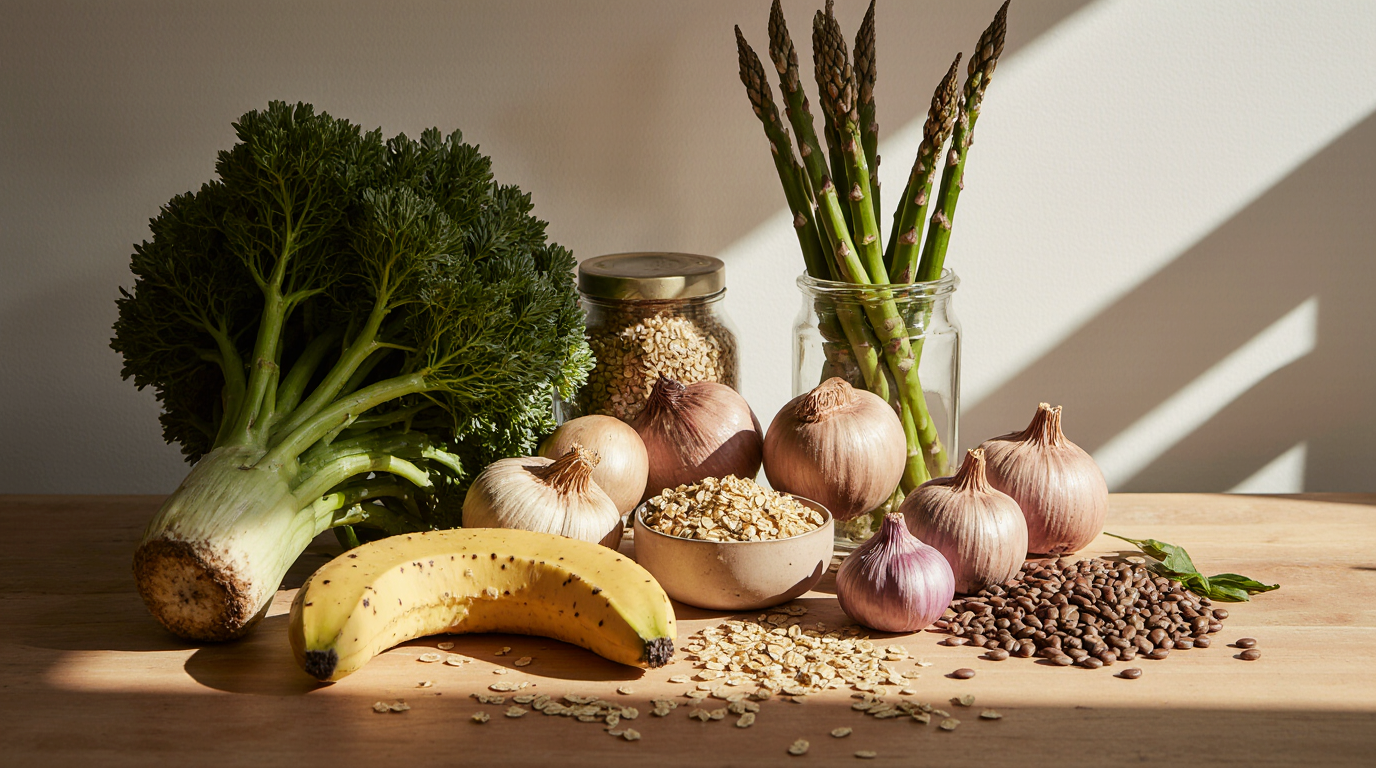
Good natural sources include:
-
Chicory
-
Jerusalem Artichoke
-
Leeks, onions, garlic
-
Asparagus
-
Legumes
-
Oats
-
Green Vegetables
-
Bananas (the riper, the more resistant starch)
Even fermented drinks like kombucha are not automatically prebiotics. Whether a food has prebiotic properties or influences corresponding processes depends on its specific components and the respective scientific evidence.

8. Prebiotics and Probiotics – A Powerful Duo
Probiotics contain defined living microorganisms. Prebiotics are certain substances that are utilized by microorganisms. Combinations of both are called synbiotics.
Products that combine defined probiotic microorganisms with a suitable prebiotic substrate are called synbiotics. Their properties depend on the specific microorganisms, substrates, and quantities used.
9. What is Kombucha – Prebiotic or Probiotic?
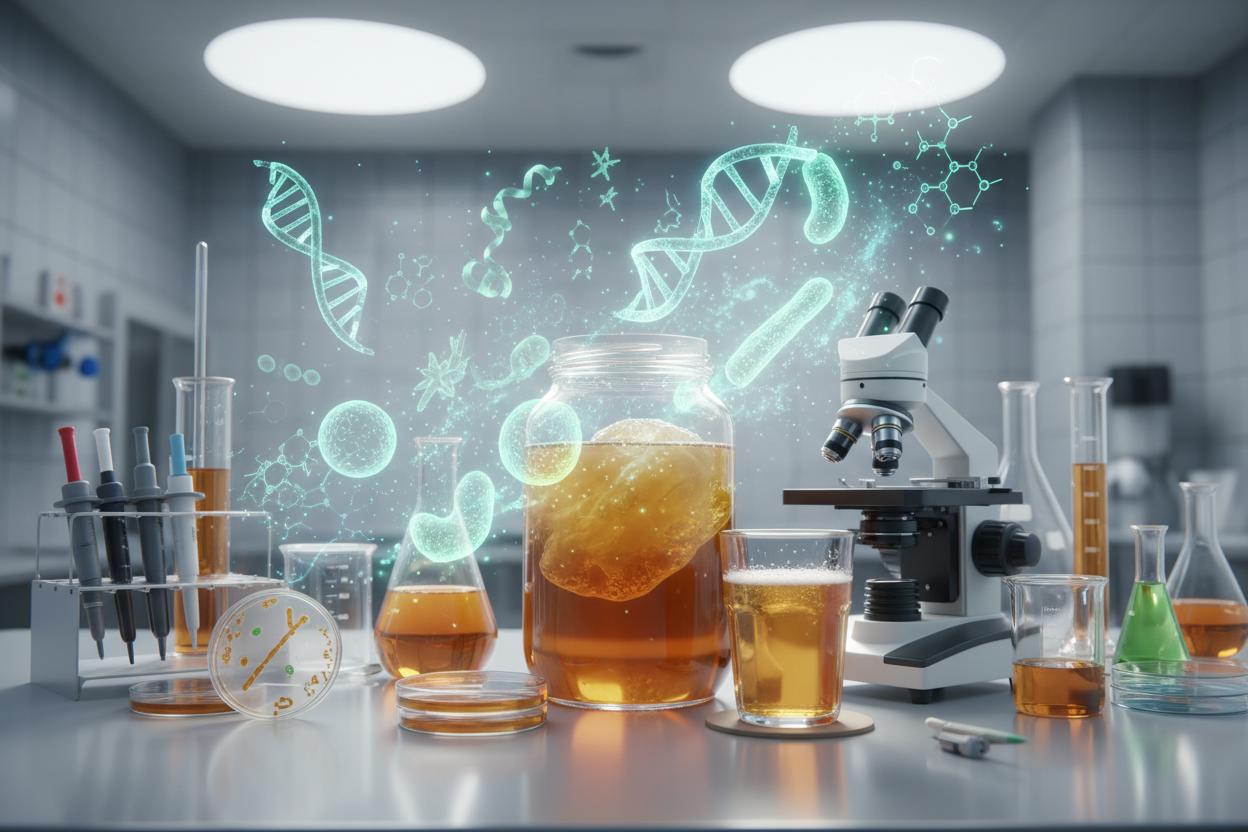
Kombucha is a fermented drink made from tea, sugar, and a community of bacteria and yeasts. Depending on the manufacturing process, unpasteurized kombucha can contain living microorganisms as well as organic acids and other fermentation products.
Is kombucha a probiotic? Not automatically. The term probiotic requires defined microorganisms and other specific conditions. The mere presence of living cultures does not automatically make a kombucha a probiotic.
Is kombucha a prebiotic? This classification also cannot be generally applied to kombucha. Prebiotics are specific, non-digestible substances that can be utilized by microorganisms.
Kombucha can therefore be most accurately described as a fermented tea drink with a complex mixture of cultures and fermentation products.
Create your individual 30-day routine
Conclusion: Prebiotics as part of a fiber-rich diet
Prebiotic fibers serve as a nutrient source for certain gut bacteria, are fermented into various metabolic products, and bring additional variety to a fiber-rich diet.
A varied and fiber-rich diet can provide various prebiotic dietary fibers and is an important component of a balanced diet.








Share: