


Where did kombucha originate?
Just as varied as the different flavor variations are the legends and myths surrounding the tea drink kombucha. While kombucha has only become better known in Europe in recent decades, the fermented tea drink has a long tradition in parts of Asia. The exact origin of kombucha is not clearly documented historically. It is often associated with East Asia, particularly China and Japan.
"Kombucha – a tradition surrounded by many legends."
According to a Chinese legend, kombucha may have existed more than 2,000 years ago. However, it cannot be proven beyond doubt whether the drink was actually made in its present-day form at that time. The origin of the name has also not been conclusively established. One commonly cited explanation links it to the Japanese term "kombu" for a type of seaweed and "cha" for tea. Another story associates the name with a Japanese doctor named Kombu. Stories about samurai who supposedly carried kombucha with them on journeys and military campaigns are also among the legends surrounding the drink. However, historically verifiable evidence for these stories is limited.
What is kombucha?
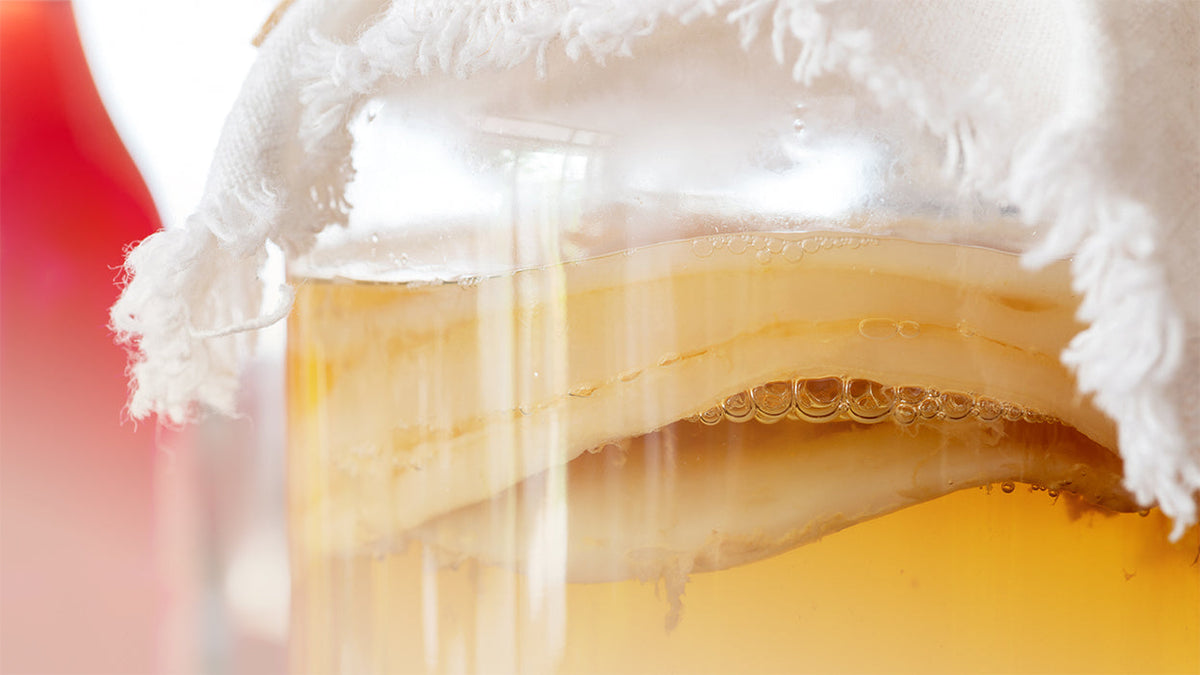
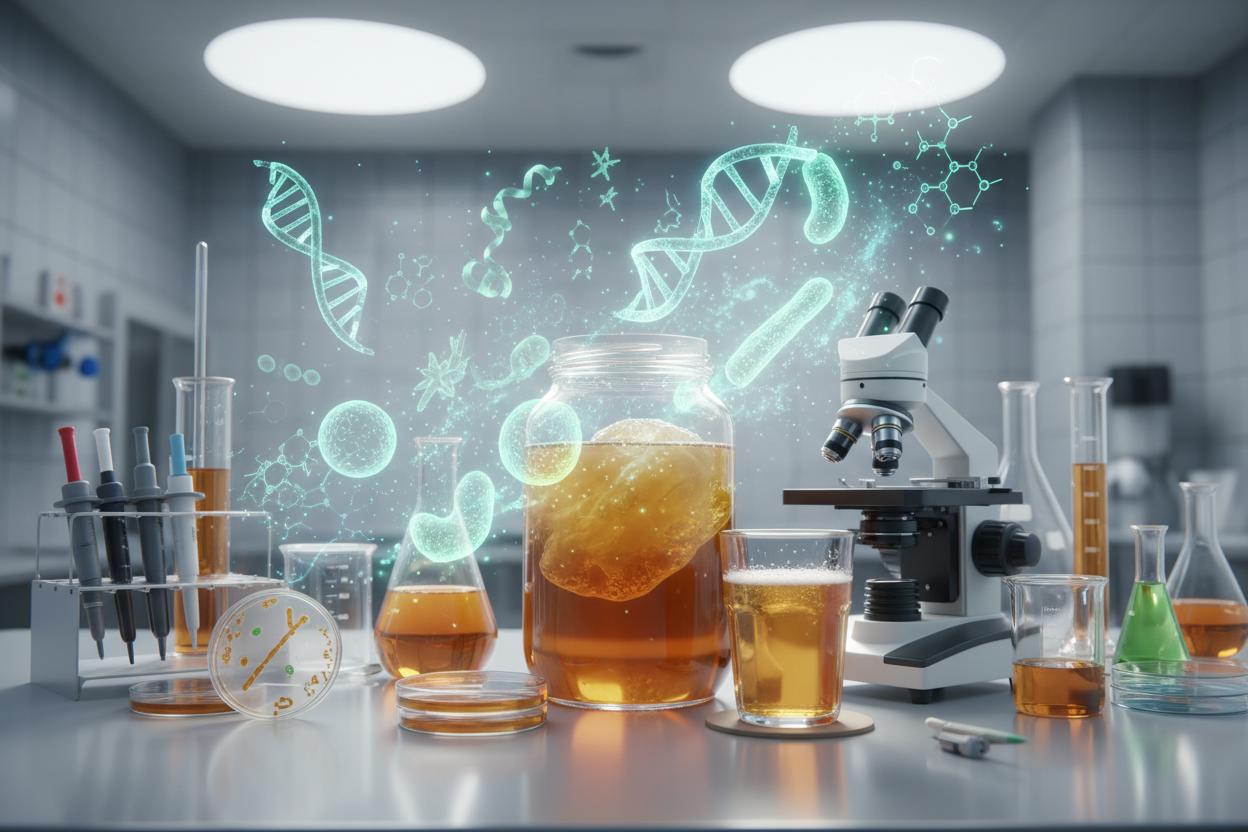
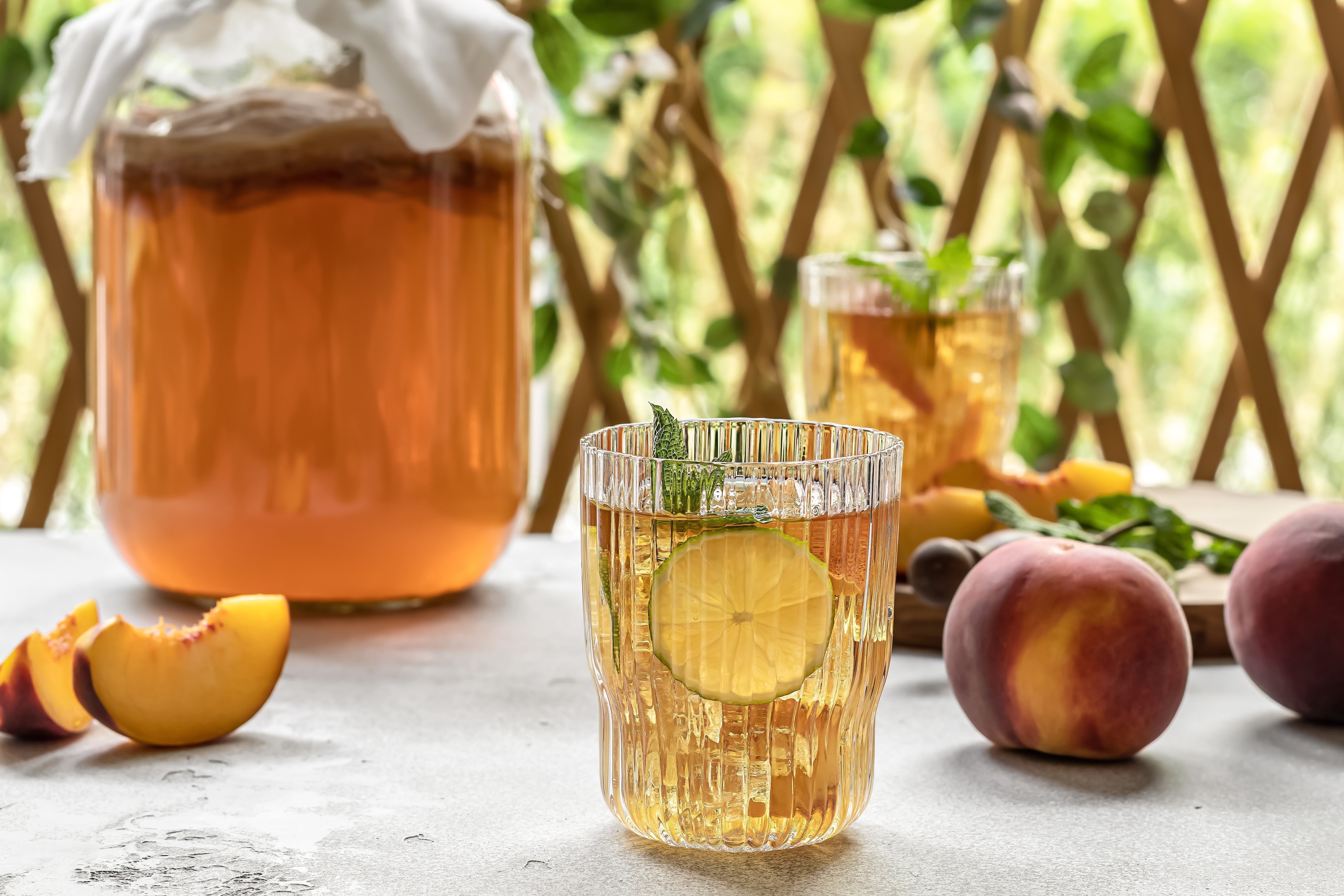
Simply put, kombucha is a fermented tea drink. To make it, sweetened tea, such as black or green tea, is fermented using a so-called kombucha culture. This culture is often referred to as a tea fungus and is also called a SCOBY. SCOBY stands for "Symbiotic Culture of Bacteria and Yeast" and describes a symbiotic community of bacteria and yeasts. During fermentation, these microorganisms metabolize components of the sweetened tea. This produces a characteristically sweet-tart drink that, depending on how it is made, can also be sparkling.
Kombucha is a flavorful alternative to classic soft drinks. Depending on the recipe, its aroma ranges from mild and fruity to distinctly tart. During fermentation, various organic acids, carbon dioxide, and other natural fermentation products can be produced. The exact composition depends on several factors, including the type of tea, the culture, the amount of sugar, and the duration of fermentation.

What substances can be produced during kombucha fermentation?
The composition of kombucha can vary considerably depending on the culture, type of tea, sugar, and fermentation conditions used. The following groups of substances may play a role in its production, but they are not automatically present in every kombucha or in nutritionally relevant amounts.
Typically, various organic acids, including acetic acid and gluconic acid, can be produced during fermentation. Carbon dioxide and small amounts of alcohol can also be formed by the activity of the yeasts and bacteria. Depending on the type of tea used, components of the tea, such as caffeine and polyphenols, may also remain in the drink. Which microorganisms, vitamins, and other substances are actually present, and in what quantities, depends on the specific product and manufacturing process.
The most important things about kombucha at a glance
Kombucha is a fermented tea drink made from sweetened tea and a culture of bacteria and yeasts. Its exact historical origin is not clearly established, but it is often associated with East Asia. Fermentation gives kombucha its characteristic sweet-tart taste. The ingredients and alcohol content can vary depending on the recipe and manufacturing conditions.
Frequently asked questions about kombucha
Where does kombucha originally come from?
The exact origin of kombucha has not been conclusively established. The drink is often associated with East Asia, particularly China or Japan. Many stories about its origin are based on traditional legends and cannot be clearly proven historically.
What does the name kombucha mean?
The origin of the name has not been conclusively established. A widely held explanation links the Japanese words "kombu" and "cha," with "cha" meaning tea. There is also a legend that a doctor named Kombu gave the drink its name.
What is a SCOBY in kombucha?
SCOBY is an abbreviation for "Symbiotic Culture of Bacteria and Yeast." It refers to a symbiotic community of bacteria and yeasts that ferments the sweetened tea. The SCOBY, which is often referred to as a tea fungus, is not a single fungus but a community of various microorganisms that often forms a gelatinous layer.
How is kombucha made?
To make kombucha, tea is brewed with sugar and, after cooling, inoculated with a kombucha culture. During fermentation, bacteria and yeasts convert components of the sweetened tea. The duration and conditions of fermentation influence the taste, acidity, and composition of the finished drink.
What ingredients does kombucha contain?
Depending on how it is made, kombucha may contain water, tea components, residual sugar, organic acids, and other fermentation products. The activity of the yeasts can also produce alcohol. The exact composition depends on the recipe, the culture used, and the fermentation conditions.
Does kombucha contain alcohol?
During fermentation, yeasts can convert sugar into alcohol and carbon dioxide. Bacteria can further metabolize some of the alcohol. How much alcohol is contained in the finished kombucha depends on several factors, including the recipe, duration of fermentation, storage, and manufacturing process. For specific information about the alcohol content, the manufacturer's product information is authoritative.
Does kombucha always taste the same?
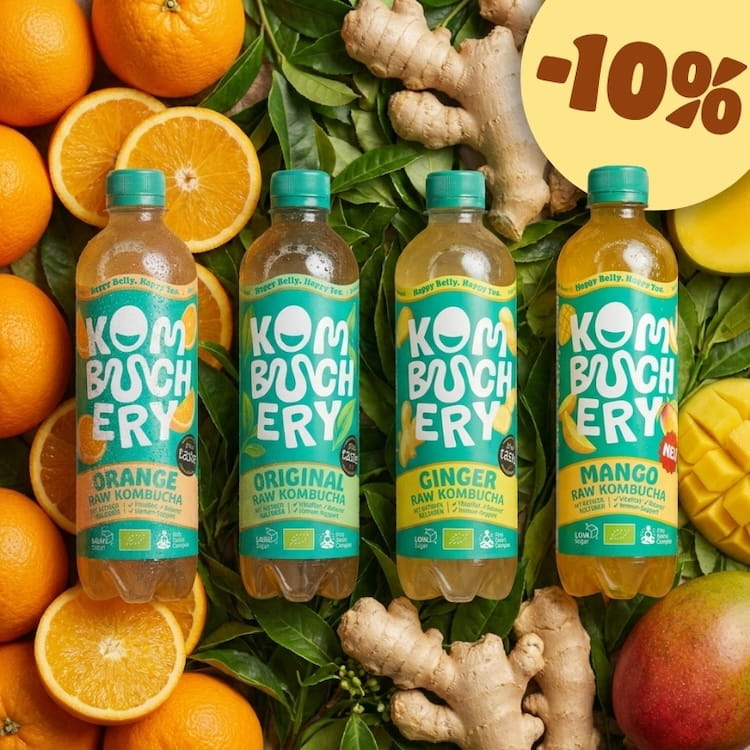
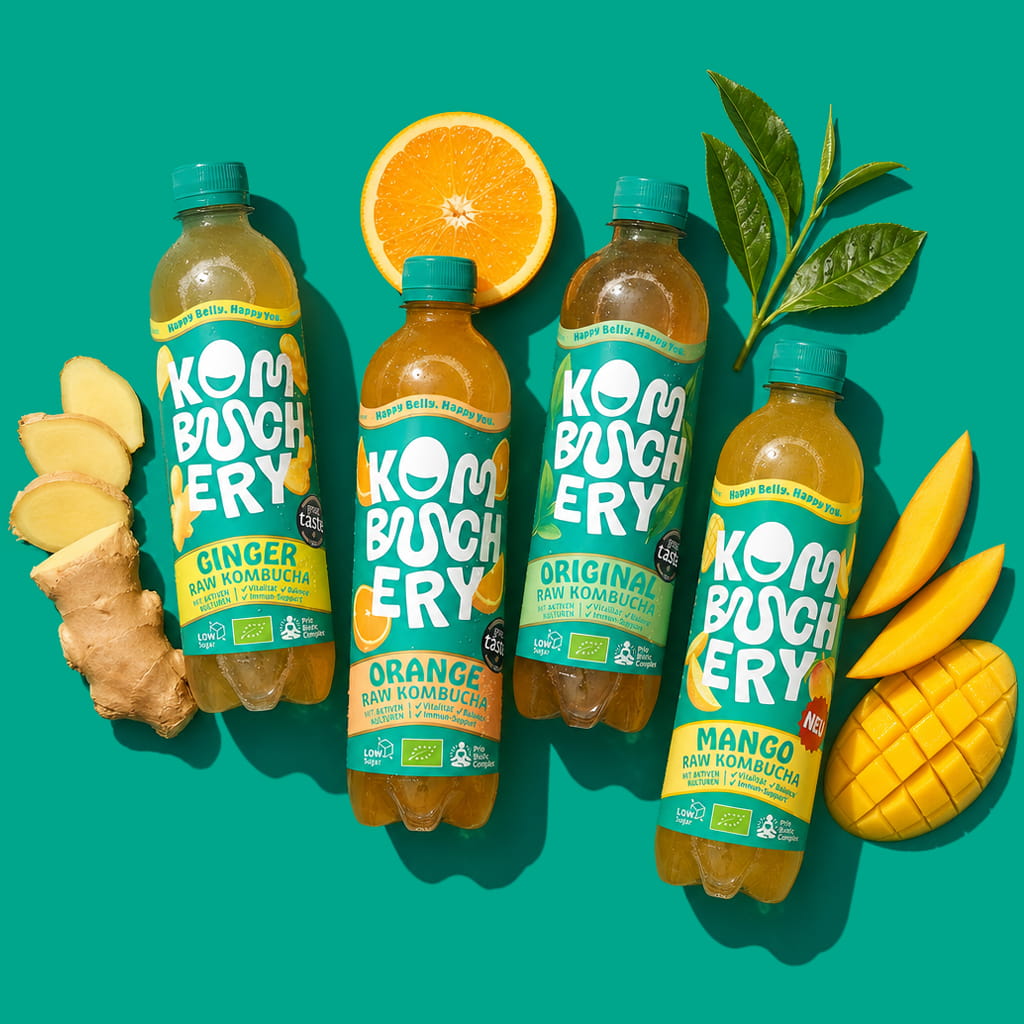
No. The taste can range from mild and slightly sweet to distinctly tart. Factors that influence it include the type of tea used, the amount of sugar, the kombucha culture, the duration of fermentation, and other possible ingredients such as fruit or spices.






Share: