



Why Kombucha Can Enrich Your Life
January 15th is World Kombucha Day (National Booch Day)! Our favorite day! Why has kombucha captivated people for so long, and what distinguishes this fermented tea beverage from traditional soft drinks?

Back to a primal diet
The fermented tea beverage is not just a soothing refreshment, but a way of life. In life, everything often has to happen very quickly, and the many stimuli can overwhelm or external circumstances can create pressure. To make kombucha, we need to be patient and allow the fermentation to proceed slowly. The result is a living, delicious, and refreshing drink that naturally enriches our lives. Kombucha combines the long tradition of fermentation with the characteristic taste of tea, natural acids, and a vibrant production culture. Depending on the recipe, it develops into a sweet-and-sour, sparkling drink with its own distinct character. Patience pays off. Good things usually only emerge over time and can then sustainably change lives. A drink produced through traditional food craftsmanship, fully in line with the Slow Food movement for conscious enjoyment, natural fermentation, and a characteristic taste.

Kombucha is made from a tea base
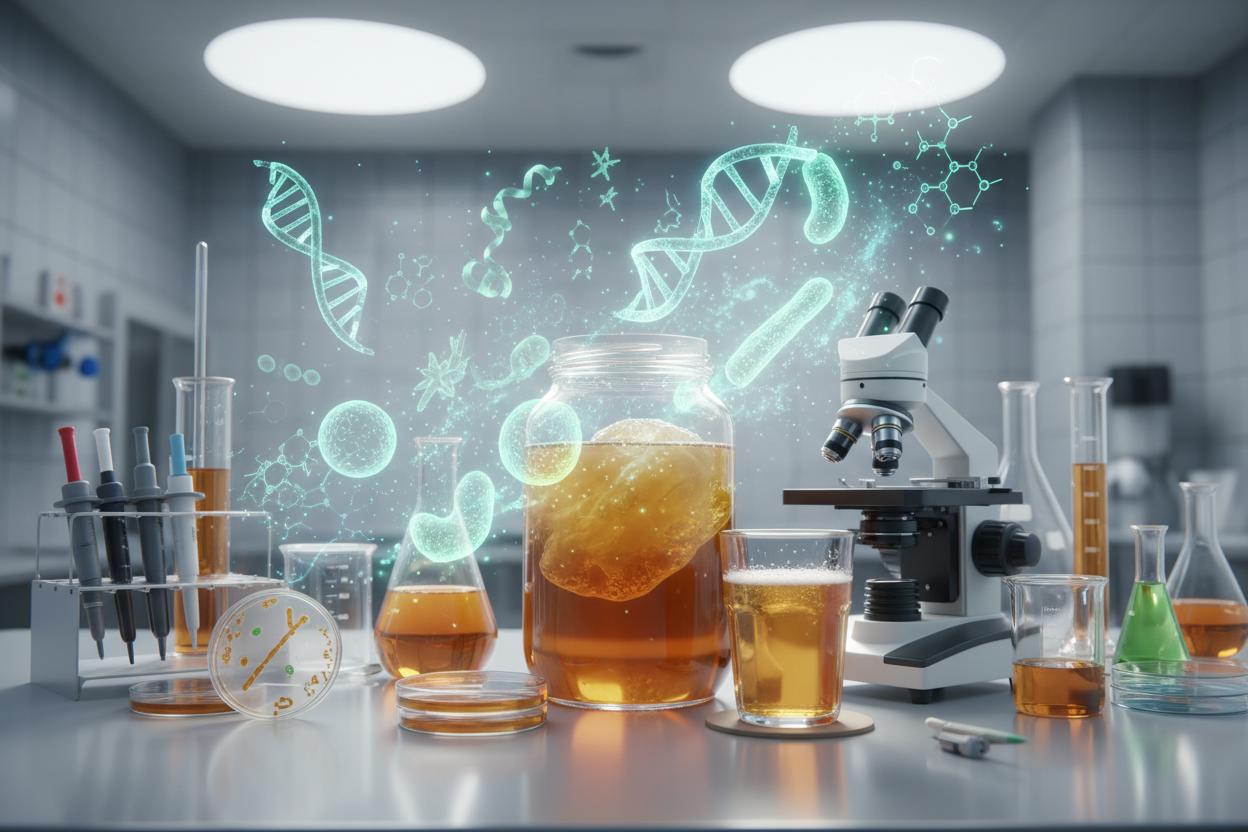
A good and flavorful tea is essential for an intensely flavored kombucha. The tea fungus consists of various yeasts and bacteria, as well as small microorganisms, and requires nutrients such as caffeine, nitrogen, and theanine to grow and thrive. These are found in the tea varieties of Camellia Sinensis. Tea provides the SCOBY with various plant components such as polyphenols and serves as the basis for fermentation. Which vitamins and other ingredients are actually contained after fermentation depends on the tea, culture, and production process. After up to 14 days of fermentation, the initially sweetened tea becomes a refreshing drink with a comparatively low sugar content. A portion of the added sugar is metabolized by the SCOBY during fermentation. At the same time, various organic acids and other natural fermentation products can be formed. These include, for example, organic acids and vitamins, as well as gluconic acid, which is responsible for the kombucha flavor.
Save on supplements through conscious nutrition
Often, we don't pay enough conscious attention to what we consume, leading to deficiencies that many of us try to compensate for with supplements. If you look closely at your diet, sometimes just small adjustments can help us prevent these nutrient or vitamin deficiencies. A varied diet can contribute to the supply of many nutrients. However, whether a specific nutrient deficiency exists and whether supplementation is advisable must be assessed individually. Kombucha should not be understood as a substitute for targeted provision in the case of a proven deficiency.
These ingredients can be formed during kombucha fermentation:
| Amino Acids | Amino acids are the smallest building blocks of proteins and play an important role in the human body. Among other things, they are needed for the formation of the body's own proteins and are involved in numerous metabolic processes. Some amino acids or compounds formed from them also play a role in signal transmission between nerve cells. |
| Butyric Acid | Butyric acid is one of the short-chain fatty acids and can be formed during the microbial breakdown of certain carbohydrates. Butyrate is also formed in the human large intestine by certain intestinal bacteria. There, it serves, among other things, as an energy source for cells of the intestinal lining and is the subject of intensive research on the gut and microbiome. Whether and in what quantity butyric acid occurs in a specific kombucha depends on the culture and fermentation conditions. |
| Succinic Acid |
Succinic acid, also known as succinate, occurs naturally in human metabolism and is an intermediate product of various biochemical processes. It can also be formed during fermentation processes. Whether and in what quantity succinic acid is contained in a specific kombucha depends on the culture used and the fermentation conditions. |
| B Vitamins | The group of B vitamins includes various vitamins that fulfill different functions in the human body. The following B vitamins, among others, have been described in scientifically examined kombucha samples: Vitamin B1, Vitamin B2, Vitamin B3, Vitamin B5, and Vitamin B12. However, which of these actually occur in a specific kombucha and in what quantity must be determined for the respective product. |
| Acetic Acid | The acetic acid formed during kombucha fermentation significantly contributes to the characteristic sour taste and low pH value. The acidic environment can hinder the growth of many undesirable microorganisms, but it does not replace hygienic production and offers no absolute protection against contamination. |
| Enzymes |
Enzymes are predominantly proteins, made up of amino acids, that act as catalysts for chemical reactions. In the human body, they play an important role in digestive and metabolic processes, among others. Various enzymes are also involved in fermentation processes. Which enzymes occur in a specific kombucha and in what quantity depends on the culture and production. |
| Gluconic Acid | Gluconic acid can be formed during the oxidation of glucose by certain microorganisms. Bacteria of the genus Gluconobacter can be involved in this process and are also found in certain kombucha cultures. The concentration of gluconic acid achieved in the finished beverage depends on the respective fermentation conditions. |
| Lactic Acid Bacteria | Lactic acid bacteria are a group of microorganisms that can occur in various fermentation processes. Lactic acid bacteria have also been detected in certain kombucha cultures. However, whether such microorganisms can be classified as probiotics depends on the specific, scientifically studied strain, its quantity, and other prerequisites. The mere presence of living lactic acid bacteria therefore does not allow for a blanket statement about an effect on intestinal flora or the immune system. |










Share: